
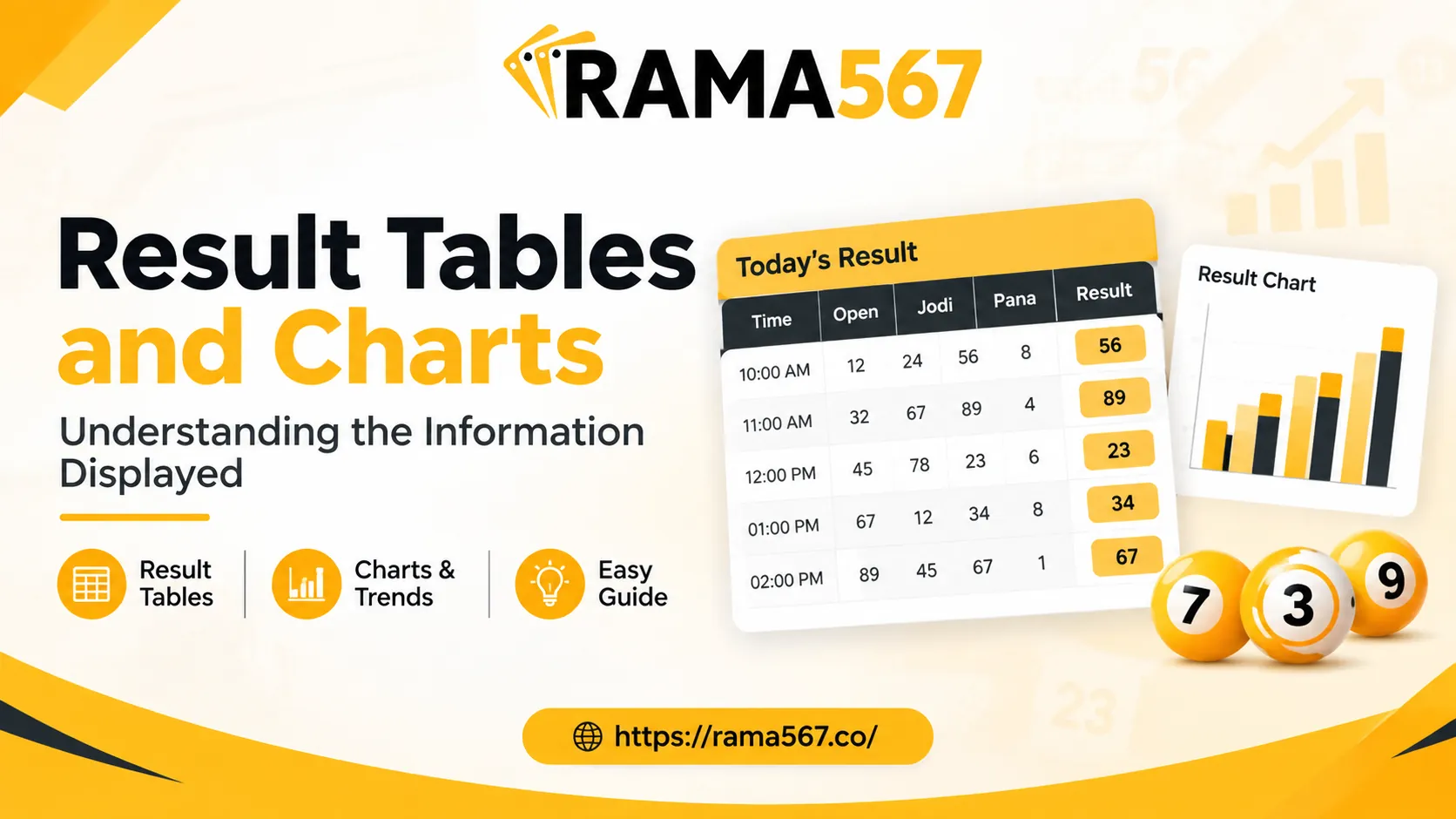
The process of navigating these charts becomes more simple once you are aware of the basic structure. A properly-organized chart or table does not aim to be confusing to visitors. It is intended to assist readers find specific dates, monitor current markets, review open and close entries, as well as reference historic archives using a clean and consistent design.
What Is a Matka Result Table?
It is an elementary information display that displays the market's results in a grid layout. Instead of displaying raw data by line the Satta Matka result table uses columns and rows to arrange various pieces of data in a row.
The majority of layouts have every row is a distinct market draw, or time block and the columns breakdown specifics of each row. The most prominent elements that are displayed are:
- Date: The particular date on the calendar that this result is the property of.
- Market Name: This is the name of a specific marketplace (such for Kalyan, Main Bazar, or regional variations).
- Open Result: Initial market number that is released at the beginning of a market series.
- Closed Result: The last amount announced at the close of this market sequence.
- Jodi Valuations: A two-digit number that is derived from closing and open entries when applicable.
- Historical Entries: Logs that are sequential of the past's events presented chronologically.
Through the organization of figures into designated cells, tables enable readers to scan through historical records without becoming confused by unformatted figures.
What Is a Matka Chart?
Although a simple result table is primarily focused on real-time or daily updates, the Matka result graph provides an aggregated, broader look at the results of past events in a long time-frame. It can be extended to include weeks, months or even years.
Charts combine individual results from each day into continuous grids of historical data. The majority of readers look up the Matka number chart for a review of historical sequences over different intervals of time.
It's important to know the difference among the different kinds of display results you could come across online.
- Daily Results Page: Shows the latest or live results of market participants on the current day.
- Result Table: Is a structured grid displaying the most current details (Date and Market times, Open Close) for one draw or a day.
- Historical Chart: A lengthy archive which combines daily entries into monthly or weekly panels that can be viewed in historical context.
- Searchable: Databases that contain tables and charts are classified according to year or market names.
Important note: A Matka chart is only an account of events that have occurred in the past. The charts are used to organize archives, but they don't have predictive abilities or accurately predict the future.
Understanding the Main Parts of a Result Table
For you to be able to read the typical Matka result table in confidence The following breakdown demonstrates the typical way of partitioning information into columns:
| Table Element | What It Usually Shows |
|---|---|
| Date | The particular date, month and year of the entry. |
| Market | The name, or specific type of markets draw (e.g. Morning or Night, Day or Night). |
| Open | A single or three-digit combination that was released at the beginning date. |
| Close | A single or three-digit combination that was released at the close date. |
| Jodi | Two-digit combinations formed by combining single numbers open and close. |
| Historical Data | Archival rows that show previously released results from earlier dates. |
Knowing these column headers lets you understand the layouts you see without becoming confused by the variations in the formatting style.
How to Read a Matka Result Table
If you're new to understanding these displays, an organized process will help make sure you understand the data properly:
- Find the date: Always look at the leftmost column, or date header first, to be sure that you're viewing the correct time frame.
- Make sure you know the name of the market: Make sure the row matches the particular market that you are interested in because multiple markets change every day.
- Find the relevant fields: Look for the column that is designated for Close, Open, or combined values within the row.
- Learn the meaning of Open and Close: The difference is between the original value posted during market's open and closing hours, as well as the price published after market closing.
- Check: That the information displayed matches with the correct date and stamp in order to prevent misinterpreting previous entries.
- Distinguish Historical Logs from live updates: Make sure that you're looking at the latest updates, not past rows that are stored within archives.
Hypothetical Reading Example
Think about a table entry that could be that is displayed in the following manner:
In this example, which is only an illustration:
- The entry will be valid through 12/05/2026 to provide a Sample Market.
- The entry that opens is represented by three.
- The final entry is represented by the number 8.
- The grouping (Jodi) shows 38.
Making sure you review entries step by step prevents you from making the mistake of assuming historical rows are actual figures or reading from an incorrect market row.
Matka Open and Close Explained
The words "Open" and "Close" are essential to Matka results details. For both digital and traditional setups like them, markets are operated with time frames that are predetermined.
- Open Result: refers to the number of numbers set at the time of the official start date of the market's operating timeframe.
- Close Result: refers to the value of the number declared at the time that is designated for closing of the same window of operation for that market.
The values are separately recorded each time they occur. When both values have been finalized portals typically combine them to create the records for the particular session. Examining the published entries can provide an historical perspective, however past open and closed values remain separate events and provide no guarantee for the next session.
Why Historical Result Tables Are Useful for Information
Reading archives that have been published serves many useful, informative goals for people who wish to learn more about how data is arranged:
- Reviewing published records of the past: Checking out what data was officially declared on particular previous dates.
- Understanding page layouts: In helping new users get comfortable with grid layouts rows, alignments of row, as well as numbers formats.
- Comparing the Historical Entry: Looking at the different ways that markets design their panels as they progress in the course of time.
- Archival Research: Examining all archives to help with documentation or education.
While archives from the past provide an accurate record of the past things, they should not be used as a predictive tool or as indicators for future events.
Result Tables vs. Charts: What's the Difference?
While people often refer to them as to refer to them, tables and charts arrange information in different ways:
| Feature | Result Table | Result Chart |
|---|---|---|
| Main Purpose | Presents structured, immediate entries in specific drawings. | Records long-term history over longer periods of time. |
| Format | Columns and rows that are standard focus on a single event. | Block panels or grids representing weeks, months or even years. |
| Best Used For | Finding specific daily entries quickly. | Examining archives of long-term history. |
| Data Scope | Date, market title, open, close, and jodi details. | The historical data is aggregated across several timespans. |
| Prediction Guarantee | None | None |
Common Mistakes When Reading Result Tables
While investigating Matka results, novices frequently make mistakes in reading. Be aware of these typical mistakes can assist you in navigating tables with accuracy:
- The wrong date Incorrectly reading the date column and mistaking an earlier record as a record from today.
- In confusion with similar titles for markets Mistaking markets which have similar names yet have different timings.
- Incorrectly interpreting open as. Close Columns Interpreting the closing value as an open value because you are moving too fast across columns.
- Presuming historical patterns guarantee results In the belief that if the same number was seen with a frequent or infrequent frequency in recent months, it's likely to occur in the future.
- The use of Archives as Live Updates Making the mistake of assuming historic summary rows on the end of a page for live, real-time updates.
- Believe in the claims about "Fixed" Numbers: Trusting other sources that claim to be able to provide "leak" numbers or guaranteed results based on analysis of tables.
How Rama567 Organizes Result and Chart Information
The platform design plays an essential aspect in how quickly people can consume historical data. Platforms like the Rama567 charts results entries, historic chart formats are laid out with standard grids, so that users are able to navigate through published documents easily.
Instead of clogging pages with numbers that are not formatted, Rama567 has dedicated sections for navigation that include a special Charts section, as well as an useful Rama567 blog. This allows users to refer to past documents and learn about the different formats of display in an organized, clear environment.
If you're looking for general details on how the results are created or examine the older archives, a clearly defined classification makes the process simple. To gain a clearer understanding of the way guides and content are organized within the platform it is possible to find out more about the Rama567 platform on their website with informational pages.
How to Use Result Information Responsibly
While reviewing a result website or educational resource taking a responsible real-world perspective is vital:
- Know the Elements of Chance: Result outputs of game systems are susceptible to random results.
- Historical data cannot be used to predict the future: Past tables provide evidence of what's already occurred but they have no bearing on the future.
- Be sure to comply with Regional Laws: Always review and adhere to the laws and regulations that apply to your area regarding gaming online and access to information.
- Beware of Chasing Losses: Never consider gaming or other related games as a way to earn money or source of income.
- Age restrictions apply: Access to gaming platforms as well as results data is only to legal adult players in areas which are regulated by laws.
Platforms like Rama567 clearly say that the users are responsible for ensuring that local rules are followed prior to accessing features and the portal's data.
Conclusion
The understanding of Matka result tables as well as Matka charts is about understanding how the basic displays of data work. Tables display immediate outcomes from the day, such as dates, market names, open figures, as well as close figures -- into clear, easily readable columns. Charts consolidate daily entry across longer periods of time into organized historic archives.
Although these tools can make finding previous records easy, it's crucial to be aware that data from the past is only data. The past numbers have no ability to predict future outcomes and should not be considered to guarantee the future.
To discover organized historical charts or to read informational guides about markets, look into all the information available on the Rama567 Charts section. You can also browse new information about the website.
Frequently Asked Questions
1.What exactly is a Matka outcome table?
The Matka outcome table is a logical arrangement that displays the outcome information by using clear columns and rows. The table typically shows important information like the date, name of market opening result, closing result, as well as the combined two-digit pair (Jodi) in particular market draw, making it easier for people to examine the published record.
2.What data is displayed in the Matka chart?
The Matka chart presents an overall historical record of previous results that have occurred in a longer time frame that could be months or weeks. The chart displays past closed values, open values and coupled pairs with a continuous grid providing visitors with the ability to look through archived entries for the long term with a logical arrangement.
3.What's the distinction between Matka open and closed?
"Open" refers to the number that was published at the beginning of a particular market's operational window "Close" refers to the number that was published at the conclusion of the market's timeframe. Both entries comprise the entire recorded result for the market's time.
4.Do past Matka charts help predict the future?
No. Historic Matka charts are simply archives of events that have occurred in the past. Since every draw result is a result of the chance of it happening, looking at historical numbers and frequency or previous patterns is not a guarantee nor can it accurately determine the future outcome.
5.What is the best way to read the Matka results table accurately?
In order to read tables properly, begin by verifying that the date is correct and then verifying for the precise name of the market. After that, you can follow the rows horizontally until you find those columns designated to display Open or Close Jodi entries. Make sure you're watching the appropriate time frame in order to avoid confusion of previous entries that have actual-time update notifications. Take a look at our extensive Matka Guide for additional information on reading.